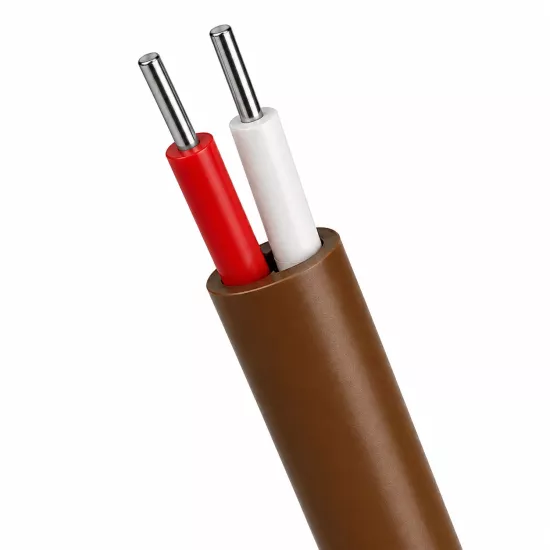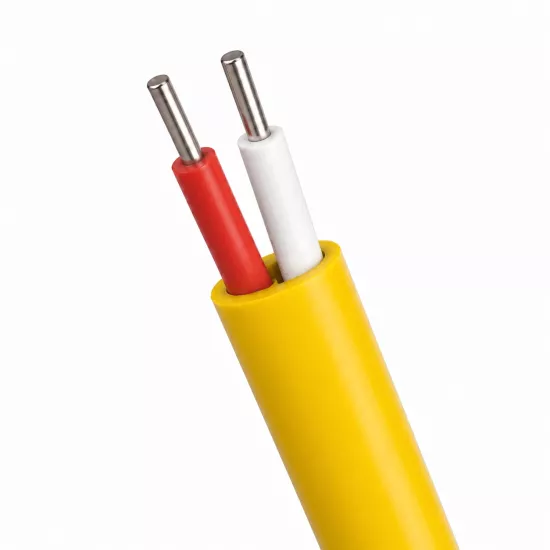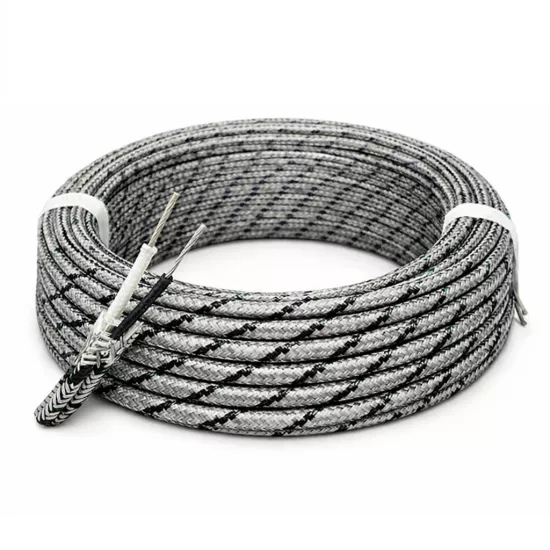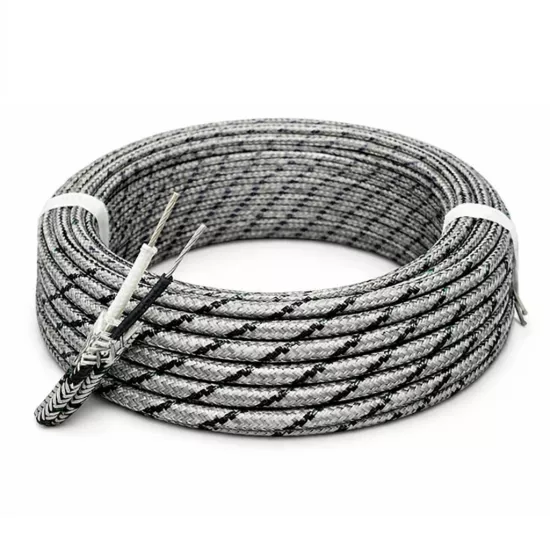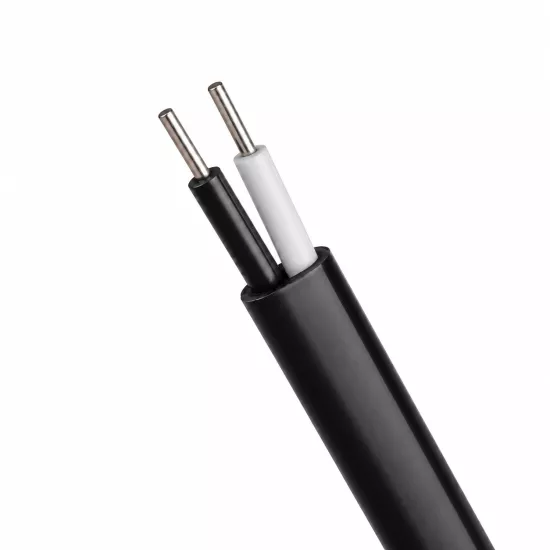
J-Type compensating cable 2x1.50 mm² is an industrial measurement cable used to maintain the connection between the J-Type thermocouple sensor and the temperature measuring instrument or controller. It helps carry the thermoelectric signal received from the sensor to the temperature controller, digital indicator, data logger, PLC thermocouple input or control panel.
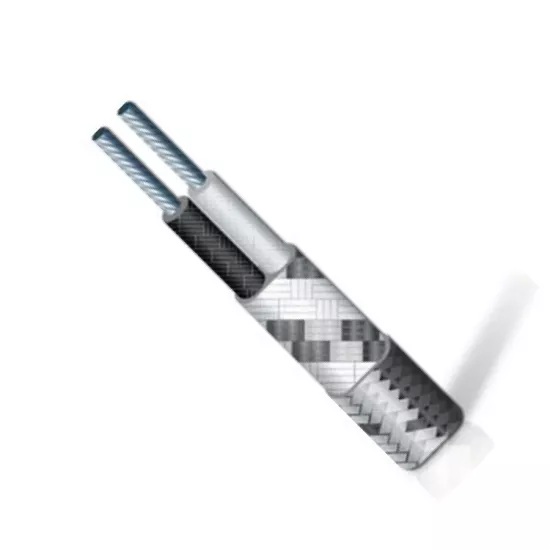
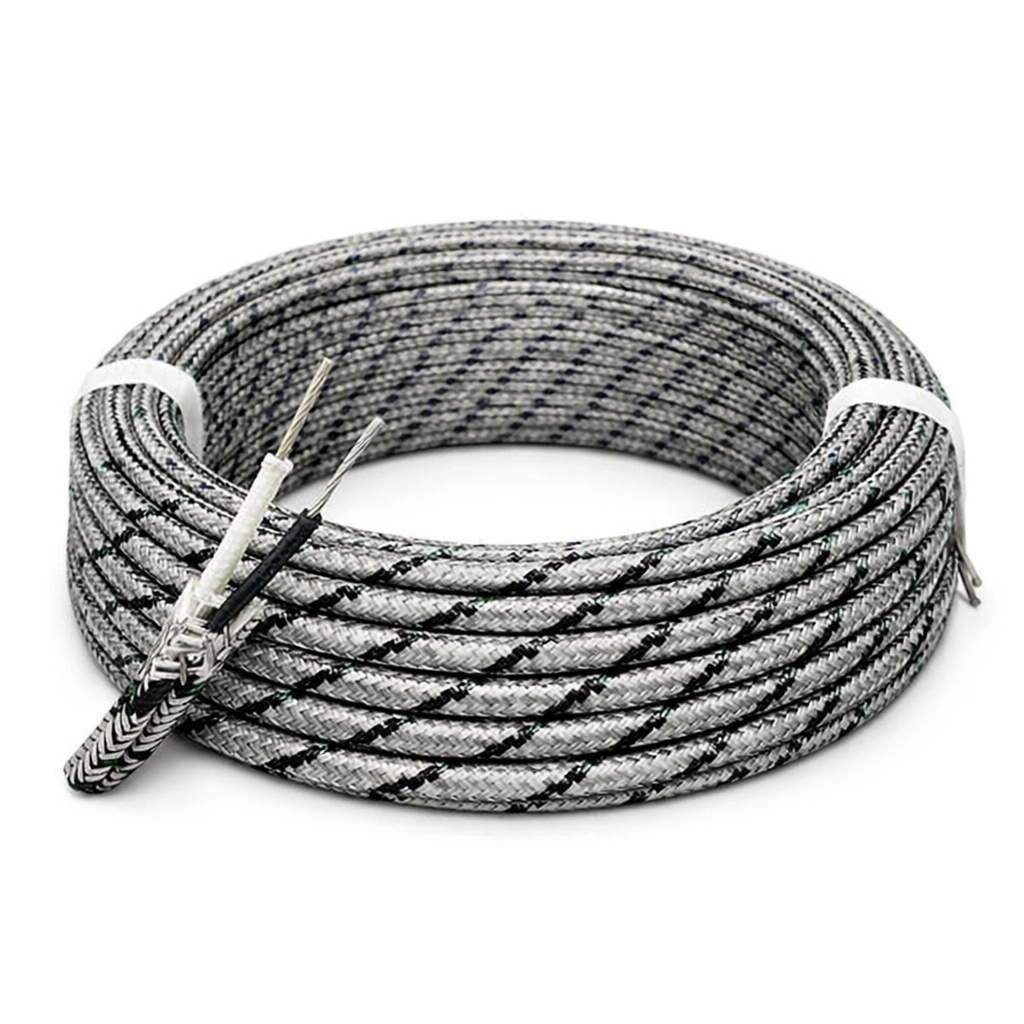
The product combines silicone- and fiberglass-based insulation layers with a steel braid on the outside. This construction is prepared for use in fixed sensor, machine, production line and control panel connections where temperature effects and superficial mechanical stress are present.
The two-core structure with nominal cross-section 2x1.50 mm² can be used in J-Type thermocouple measurement circuits with suitable terminals and connectors. The product is supplied as a single 100-meter roll and can be cut to the lengths required for production, maintenance, control-panel assembly, and field applications.
This product is not a standard power supply cable. It should be used in J-Type thermocouple measurement circuits. It must be verified that the sensor type, compensating cable, connection elements and measuring instrument input are compatible with each other.
The product uses silicone + fiberglass + steel braid for its insulation and protective construction. The silicone and fiberglass layers help keep the cable cores electrically separated and protect the cable body.
Silicone-based insulation can be preferred in sensor and panel connections that require flexibility. The fiberglass structure supports the cable body in fixed industrial connections where temperature effects are present.
The steel braid on the outside creates an auxiliary mechanical protection layer around the cable. It contributes to the protection of the cable against friction and light mechanical effects in routes with machine body, panel passage, cable duct and surface contact.
The main function of the steel braid is mechanical protection. If it is planned to be used as an electrical shield, the electrical continuity of the braid, coverage structure, connection method and device manufacturer's instructions should also be evaluated.
The expression Fe-Const refers to the thermoelement pair used in J-Type thermocouple systems. Fe refers to the iron conductor and Const refers to the thermoelement alloy called Constantan.
When choosing a compensating cable, not only the core cross-section but also the type of thermocouple used should be taken into consideration. This product should be used in J-Type thermocouple measurement circuits. For different thermocouple types, a cable compatible with the relevant sensor type must be selected.
Using a compensating cable compatible with the J-Type measurement circuit helps maintain the connection between the sensor and the measuring instrument with the appropriate cable structure.
The actual measurement performance of the system does not depend solely on the cable. The system formed by the sensor, ports, connectors, ambient temperature and measuring instrument should be evaluated together.
Silicone- and fiberglass-based insulation structure can be preferred in industrial sensor connections where temperature effects are present. However, the exact operating temperature of the cable should not be determined solely by looking at the insulation material.
The temperature limits of the conductor construction, insulation layers, steel braid, terminal, connector and connection points should be evaluated together. For exact operating temperature and thermoelectric tolerance values, the manufacturer's technical documentation should be used as the basis.
The steel braid does not transform the cable into a completely enclosed or leak-proof outer sheath. In environments where there is moisture, liquid, oil, chemicals or dense dust, the product's compliance with environmental conditions should also be checked.
The cable should not be subjected to excessive pulling force, crushing, sharp edges or repeated bending. Steel braid helps with mechanical protection, but does not provide unlimited protection against heavy mechanical loads.
In the J-Type thermocouple measurement circuit, the positive and negative conductors must be connected to the corresponding terminals on the sensor and the measuring instrument. Sensor polarity, cable ends and device terminal markings must be checked before installation.
Reverse polarity may cause the temperature change to appear in the wrong direction on the device or to incorrectly interpret the measurement value. The connection polarity from the sensor to the measuring instrument must be maintained.
Compensating cable, thermocouple terminal and connector compatible with J-Type must be used in the J-Type measurement circuit. Standard copper cable or connection materials of different thermocouple types may create inappropriate metal connections in the measurement line.
While preparing the cable end, care should be taken to ensure that the steel braid wires do not come into contact with the measurement cores or device terminals. The shield must be properly removed and the connection area must be isolated in accordance with the application.
When using 2x1.50 mm² cross-sectional structure, the compliance of the measuring instrument and connection terminals with this cross-section should be checked. Cable ferrules, terminals and other connection elements must be compatible with the core cross-section used.
Compensating cable should be routed as far as possible from motor supply lines, inverter outputs, contactor lines and high-current power cables.
The product is supplied as a single 100-meter roll. Cutting can be done from the roll in lengths required by production, maintenance, panel assembly or field application.
When determining the cutting length, the actual route between the sensor and the measuring instrument, the distance within the panel, the turning points and the mounting allowance required for the terminal connection must be taken into account.
When unrolling, care should be taken to ensure that the cable is not knotted, crushed or bent to a smaller diameter than necessary. The unused section should be stored in a dry, clean area away from the risk of mechanical damage.
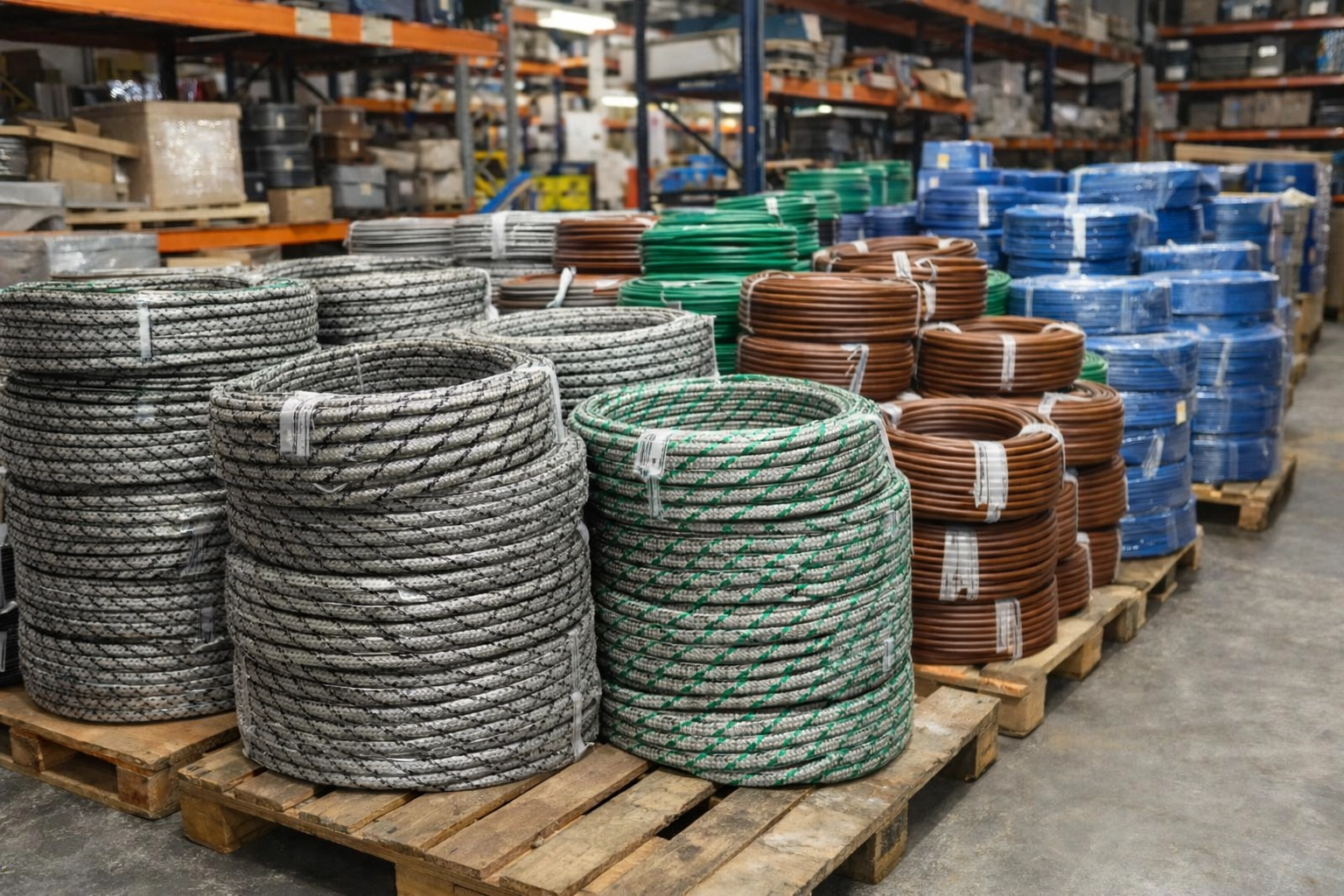
Cables used in production and maintenance processes 100-meter roll options are available for bulk purchase. You can choose the number of cores, nominal cross-sectional area, and insulation construction suitable for your application from the thermocouple, PT100, and compensating cables.
This product is aimed at production, maintenance, automation and control panel businesses that need a 100-meter roll of cable. Before ordering, the suitability of the sensor type, number of cores, cross-section, insulation structure and cable construction for the application should be checked.
When selecting J-Type compensating cable, thermocouple type, measuring instrument input, nominal cross-section, connection distance, insulation structure, mechanical protection need and environmental conditions should be evaluated together.
This product should be used in J-Type Fe-Const thermocouple measurement circuits. For K, T, N, E, R, S or different thermocouple types, a cable compatible with the relevant sensor type must be selected.
When selecting the 2x1.50 mm² cross-section structure, the device terminal size and the connection elements to be used should be checked. A larger nominal cross-section does not in itself mean better measurement performance.
This product is prepared for use in temperature measurement circuits with J-Type Fe-Const thermocouple sensors.
The compensating cable helps maintain the connection between the thermocouple sensor and the measuring or controller in accordance with the relevant thermocouple type.
The expression Fe-Const indicates the thermoelement pair in the J-Type thermocouple circuit. Fe refers to the iron conductor and Const refers to the thermoelement alloy called Constantan.
This statement indicates that the cable consists of two cores and each core has a nominal conductor cross-section of 1.50 mm².
The product is supplied as a single 100-meter roll.
The cable can be used by cutting it from the roll to the lengths required by the application. Cutting and tip preparation should be done with appropriate equipment.
The combination of silicone and fiberglass helps insulate the cable cores and protect the cable body in fixed sensor connections where temperature influences are present.
The steel braid creates an auxiliary layer of mechanical protection around the cable. It helps protect the cable against friction and surface mechanical effects.
The main function of the steel braid is mechanical protection. In order to be considered an electrical shield, the electrical continuity of the braid, coverage structure, connection method and manufacturer's technical data must be checked.
No. This product is used for the connection of thermocouple measurement circuit. It should not be used to power motors, heating elements or other electrical loads.
It is suitable for businesses that produce regular sensors, carry out maintenance-repair work, prepare control panels or need J-Type compensating cables of different lengths.
The manufacturer's technical data sheet should be used as the basis for the conductor material of the cable, thermoelectric tolerance class, exact operating temperature, core colors, outer dimension, steel braid material, minimum bending radius and environmental resistance limits.
During product selection and installation, thermocouple type, measuring instrument input, cable cross-section, terminal structure, ambient temperature, humidity, mechanical loads and cabling route should be evaluated together.




 EN
EN Türkçe