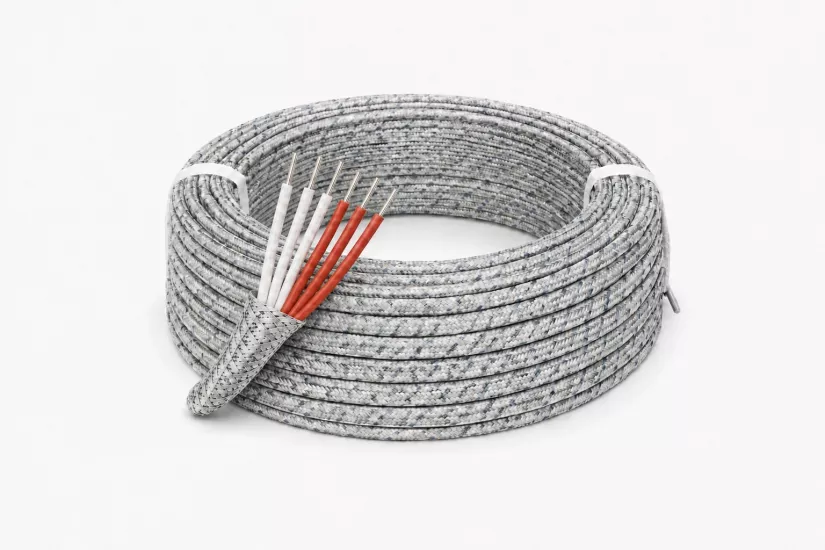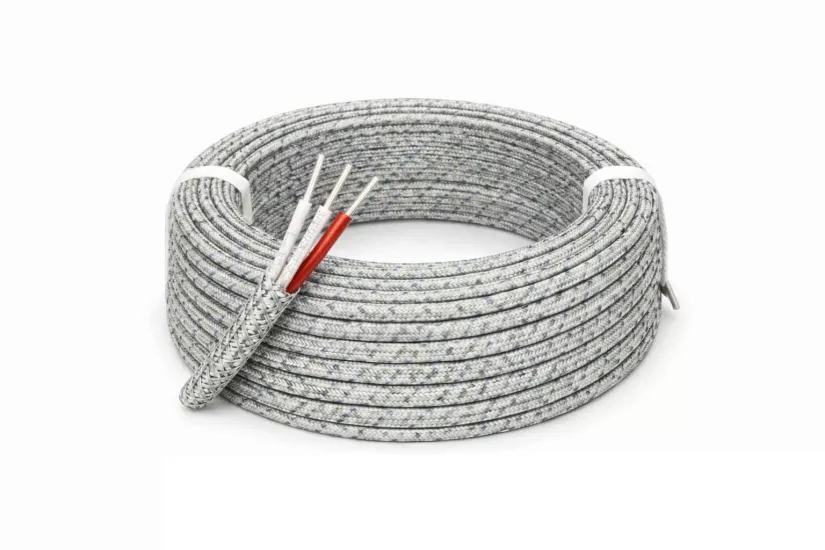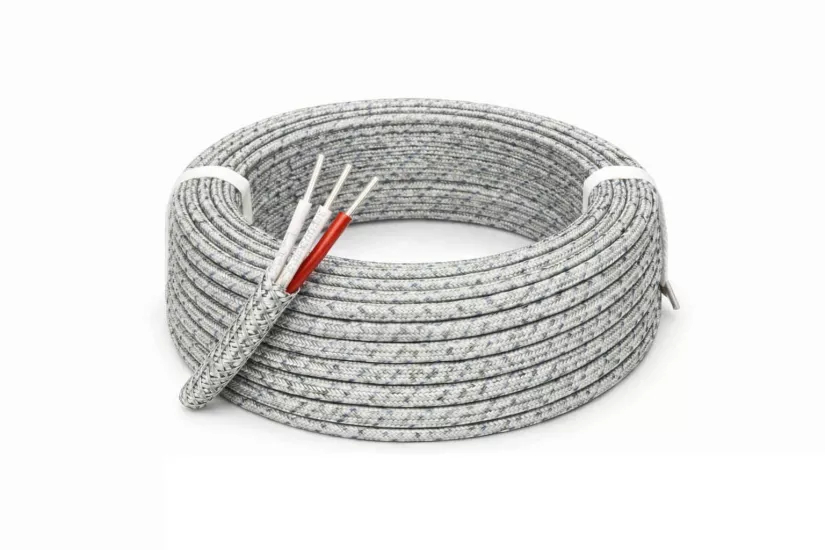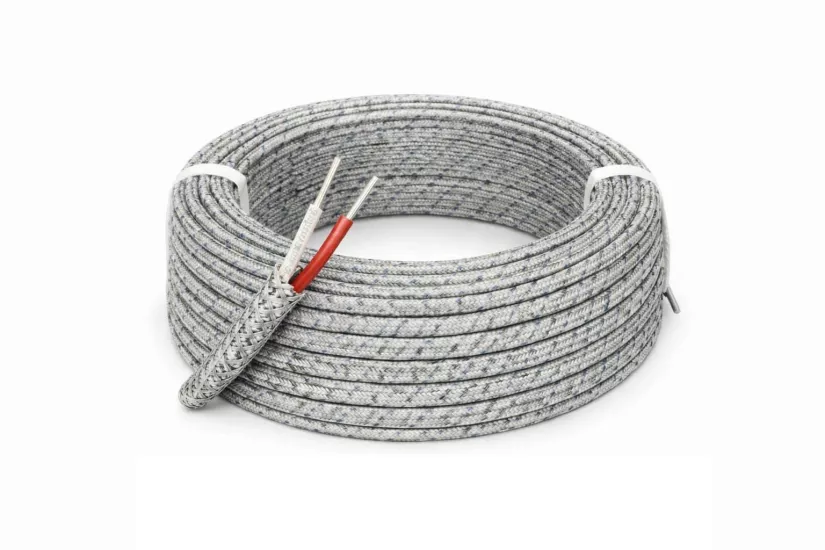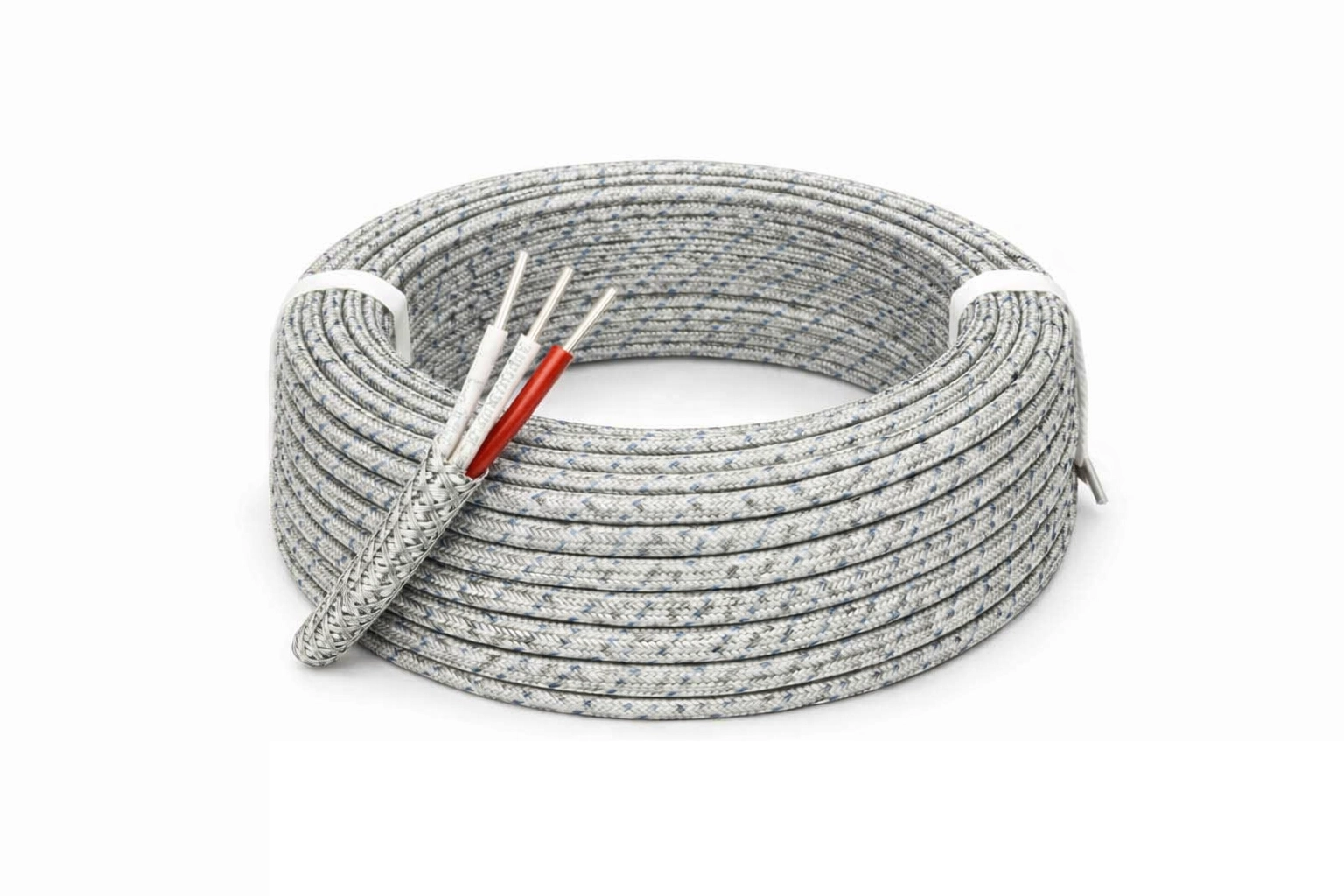
PT100 Cable 3x0.22 mm² is a sensor cable prepared for three-wire RTD/PT100 sensor connections in industrial environments with high temperature effects. It can be used in measurement connections between the PT100 sensor and the temperature indicator, controller, data logger, PLC RTD input or control panel.
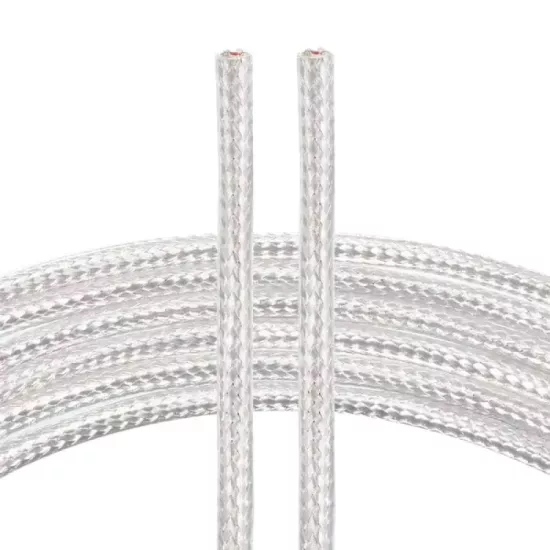
With its three-core construction, fiberglass inner insulation, fiberglass outer braid, and steel braid, the cable is suitable for fixed sensor connections near hot surfaces. The fiberglass layers help protect the insulation in high-temperature connections, while the steel braid provides additional mechanical protection for the cable body.
The three-wire connection structure can help compensate for the influence of connecting wire resistance on the measurement when the measuring instrument supports three-wire RTD input and the electrical characteristics of the cores match each other.
This product is not a thermocouple cable or a power supply cable. It should be used to transmit the temperature-dependent resistance change of PT100 and compatible RTD sensors to the measuring instrument. The sensor wiring diagram, the instrument's RTD input type, and the cable core arrangement should be checked before installation.
Fiberglass insulation used in the cores and outer parts of the cable is preferred in high-temperature fixed sensor connections where standard plastic insulations are not suitable. It can be evaluated in PT100 connections around the furnace, heat treatment equipment, hot mold, machine body and process line.
Fiberglass helps to electrically separate the cores and protect the cable structure in applications where high temperatures directly or indirectly affect the cable route. Braided structure is an insulation solution used in industrial sensor cabling that requires temperature resistance.
The exact operating temperature of the product should not be determined solely by looking at the fiberglass insulation. The temperature limits of the conductor construction, outer braid, steel braid, terminal, connector, sensor output and splice points should be evaluated together.
The cable should not be placed in direct contact with flame and should not be used at temperatures not verified by the manufacturer. For continuous and instantaneous temperature conditions in application, the manufacturer's technical data must be used as the basis.
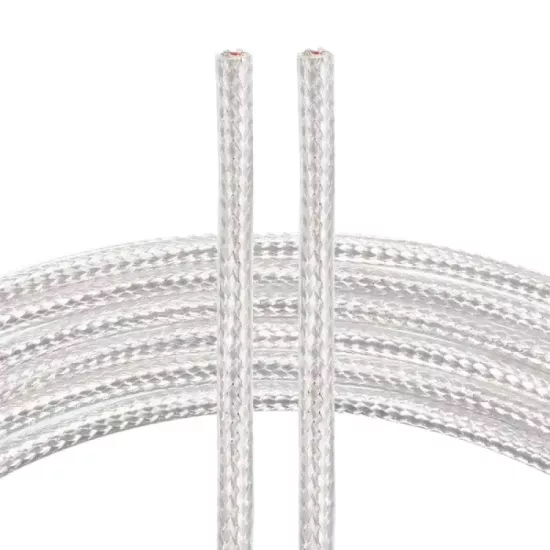
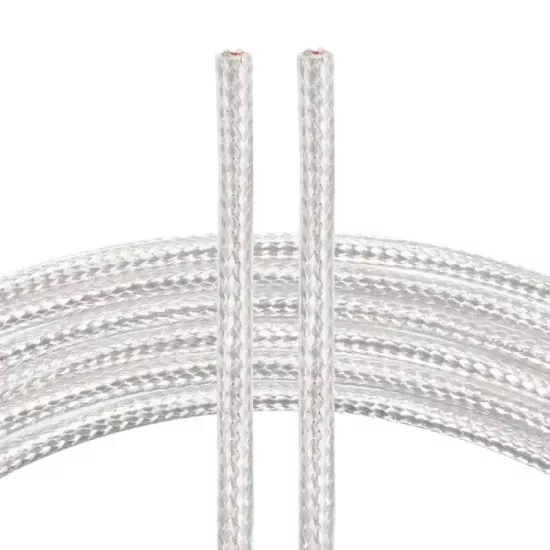
The three cores of the cable are separated from each other by fiberglass based insulation. In addition to the inner insulation around the cores, the fiberglass braid in the outer section holds the cable bundle together and supports the outer construction in high temperature connections.
The fiberglass braided surface has a different structure than standard PVC or similar plastic outer sheaths. During assembly, the cable should not be crushed, rubbed against sharp edges, or pulled in a way that could damage the knitting fibers.
If there is a possibility of direct contact with a hot surface along the cable route, the cable's operating temperature, surface temperature and contact time should be evaluated together. When necessary, cable duct, protective sheath, ceramic transition or appropriate mounting equipment should be used.
The steel braid around the cable provides auxiliary mechanical protection to the fiberglass cable trunk. It helps protect against friction and light mechanical effects on routes where there is a risk of contact, such as the machine body, panel passage, metal surface and cable duct.
The steel braid supports the outer construction of the cable in high-temperature industrial environments. However, it does not protect the cable indefinitely against heavy impact, crushing, cutting or excessive pulling force.
The main function of steel braid is mechanical protection. To be considered an electrical shield, the material of the braid, its electrical continuity, coverage structure and connection method must be verified with the manufacturer's technical data.
The grounding or shield connection of the shield should not be made the same way in every application. The connection instructions of the measuring instrument manufacturer, the electrical project and the grounding structure of the facility should be used as the basis.
PT100 is a RTD sensor whose electrical resistance changes depending on temperature. Unlike thermocouples, it does not produce thermoelectric voltage and there is no positive-negative polarity in the PT100 measuring element.
In the three-wire PT100 connection, two wires are connected to one side of the sensor and a single wire is connected to the other side. The length, nominal cross-section, conductor structure and connection points of two cores connected to the same side should be as similar as possible.
When the measuring instrument supports three-wire RTD input, the heating elements of two identical cores can help compensate for the connecting wire effect. The performance of balancing depends on the measurement method of the device, the closeness of the core heating elements and the connection quality.
If it is necessary to make additions to the cable, the same nominal cross-section, conductor structure and connection method should be used in all three cores. Conductors of different cross-sections, loose terminals or oxidized joints may affect the measurement result.
The product consists of two white and one red core. In three-wire PT100 connections, two wires of the same color are usually connected to the same side of the sensor, and wires of a different color are connected to the other side.
Since PT100 is a resistance-based sensor, the red and white cores do not indicate positive-negative polarity. Colors make it easy to distinguish core groups and sensor terminals.
The connection should not be made just by looking at the core colors. The sensor manufacturer's wiring diagram and the measuring instrument's RTD terminal descriptions should be checked. Core colors alone do not prove official standard compliance or certification.
Fiberglass insulation is a preferred structure in industrial sensor connections where high temperature effects are present. However, the exact continuous and instantaneous temperature limits of the cable must be determined according to the manufacturer's technical documentation.
The steel braid does not transform the cable into a completely enclosed or leak-proof outer sheath. In environments where there is moisture, liquid, oil, chemicals or dense dust, the product's compliance with environmental conditions should also be checked.
The cable should not be subjected to excessive pulling force, crushing, sharp edges or repeated bending. This product should be evaluated primarily for fixed sensor connections.
When planning the cable route in high temperature applications, the possibility of hot surfaces, radiant heat, moving parts, vibration and mechanical contact should be evaluated together. Unnecessary length of the cable in the hot zone should be reduced as much as possible.
Points such as the sensor output, cable splice, terminal box and device connection may have a lower temperature limit than the cable itself. The component with the lowest resistance value determines the allowed operating temperature of the system.
The cables must be connected to the PT100 sensor and the corresponding RTD terminals of the measuring instrument according to the sensor connection diagram. Verify that the measuring instrument supports three-wire PT100 input.
In a three-wire connection, it is important that the length, cross-section, joint point and terminal connections of the two cores connected to the same sensor end are similar. Significant differences in core properties can reduce the effectiveness of cable resistance compensation.
While preparing the cable end, care should be taken not to disperse the fiberglass braid more than necessary. The outer braid must be opened in a controlled manner without damaging the core insulation, and the connection area must be prepared with high temperature connection materials suitable for the application.
Steel braid wires must not come into contact with the measurement cores or device terminals. The shield must be properly removed and exposed metal wires must be properly contained.
The PT100 cable should be routed as far as possible from motor supply lines, inverter outputs, contactor lines and high-current power cables.
If the cable is carried from a hot area to a control panel with a lower temperature, appropriate glands, protective sheaths or terminal boxes must be used at the transition points.
When selecting the PT100 cable, the two-, three- or four-wire connection structure of the sensor; RTD input type of the measuring instrument; connection distance; core cross-sectional area; operating temperature. The need for insulation and mechanical protection should be evaluated together.
This 3x0.22 mm² product has a three-core construction and should be considered for three-wire PT100 connections exposed to high temperatures. A suitable two-core sensor cable must be used in two-wire systems, and a suitable four-core sensor cable in four-wire systems.
Fiberglass insulation provides advantages in fixed connections with high temperature effects, and steel braid provides advantages in routes where superficial mechanical protection is required. When making the final choice, technical documentation of the sensor, cable and measuring instrument should be compared.
Yes. Due to its fiberglass inner and outer insulation structure, it can be preferred in fixed PT100 sensor connections where high temperature effects are present. The exact operating temperature must be determined according to the manufacturer's technical documentation.
The product should be evaluated for three-wire PT100 and compatible RTD temperature sensor connections. The connection diagrams of the sensor and measuring instrument should be checked.
This statement indicates that the cable consists of three cores and each core has a nominal conductor cross-section of 0.22 mm².
When the measuring instrument supports three-wire RTD input and the electrical characteristics of the cores match each other, it can help compensate for the effect of connecting wire resistance on the measurement.
No. PT100 is a resistor-based RTD sensor and does not have positive-negative polarity. Core colors make it easier to distinguish connection groups.
Fiberglass insulation helps protect the electrical insulation and cable structure in high-temperature sensor connections where standard plastic insulations are not suitable.
Exact operating temperature depends on the technical values of the conductor, fiberglass insulation, steel braid, terminal and connection elements. An exact temperature range should not be specified without verified manufacturer data.
The steel braid forms an auxiliary layer of mechanical protection around the cable trunk. It helps protect the cable against friction and surface mechanical effects.
In order to be considered an electrical shield, the electrical continuity of the braid, coverage structure, connection method and manufacturer's technical data must be checked. The main function of the steel braid is mechanical protection.
The product should first be evaluated for fixed sensor connections. For continuous motion, repetitive bending or cable carrier chain applications, manufacturer suitability must also be verified.
No. This product should be used in measurement connections of PT100 and compatible RTD sensors. It should not be used to power motors, heating elements or other electrical loads.
The manufacturer's technical data sheet should be used as the basis for the conductor material of the cable, actual core resistance, continuous and instantaneous operating temperature, outer diameter, steel braid material, minimum bending radius and environmental resistance limits.
During product selection and installation, PT100 connection type, measuring instrument input, cable length, terminal structure, ambient and surface temperature, radiant heat, humidity, mechanical loads and cabling route should be evaluated together.




 EN
EN Türkçe