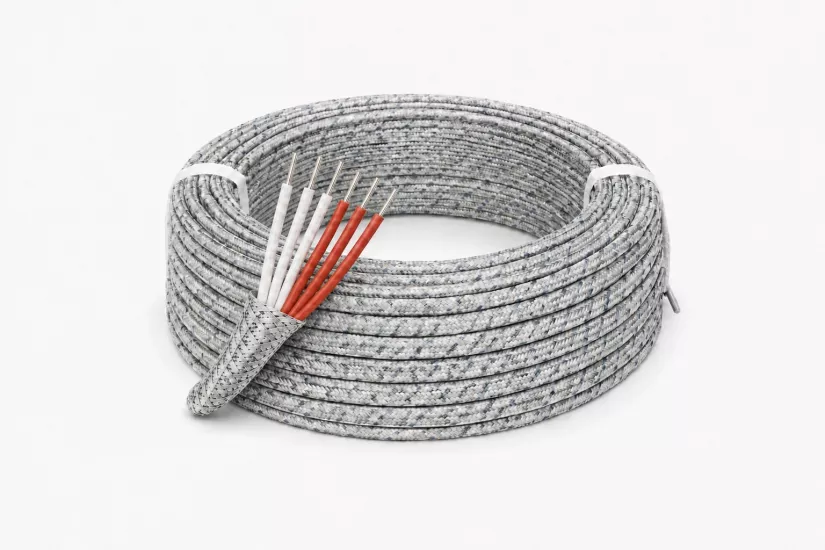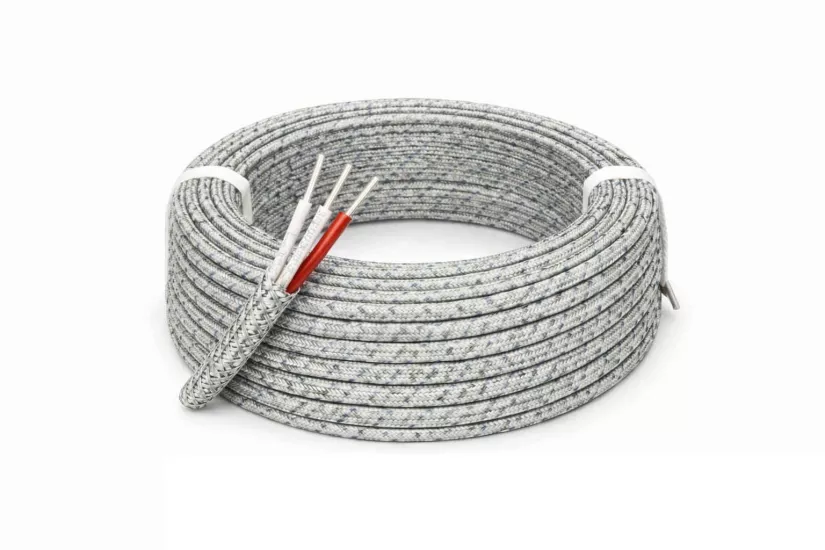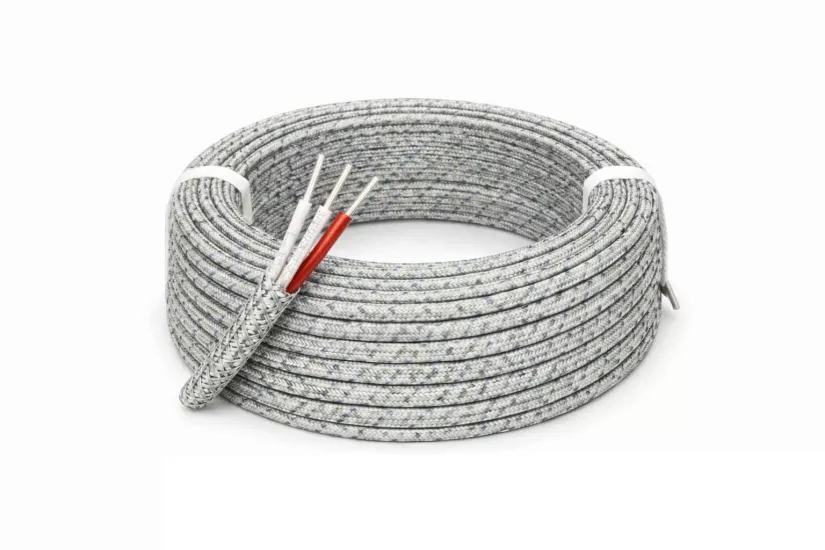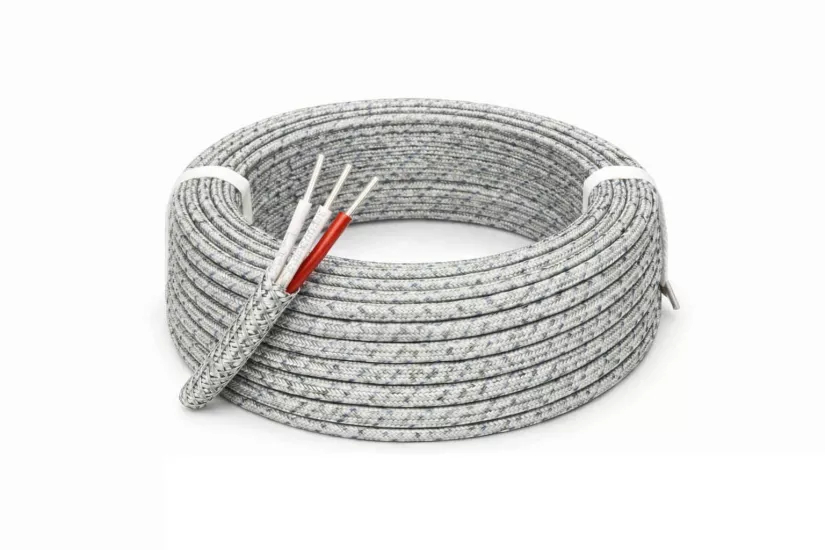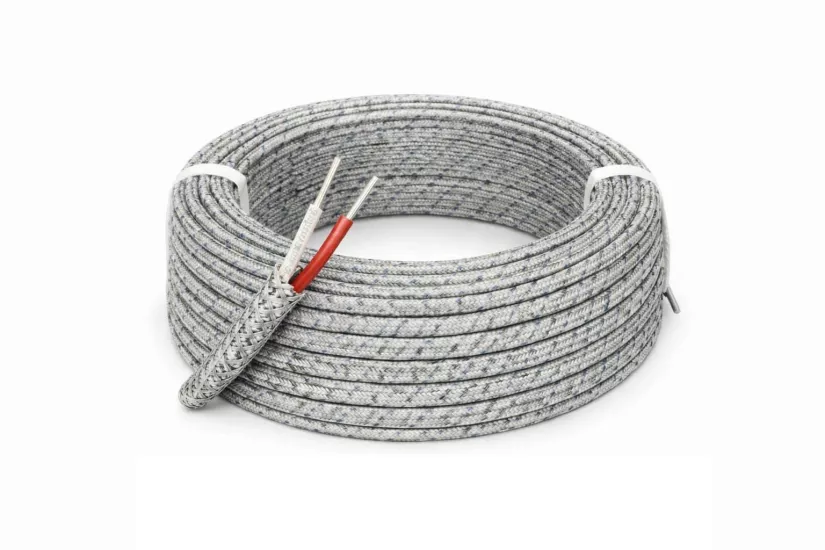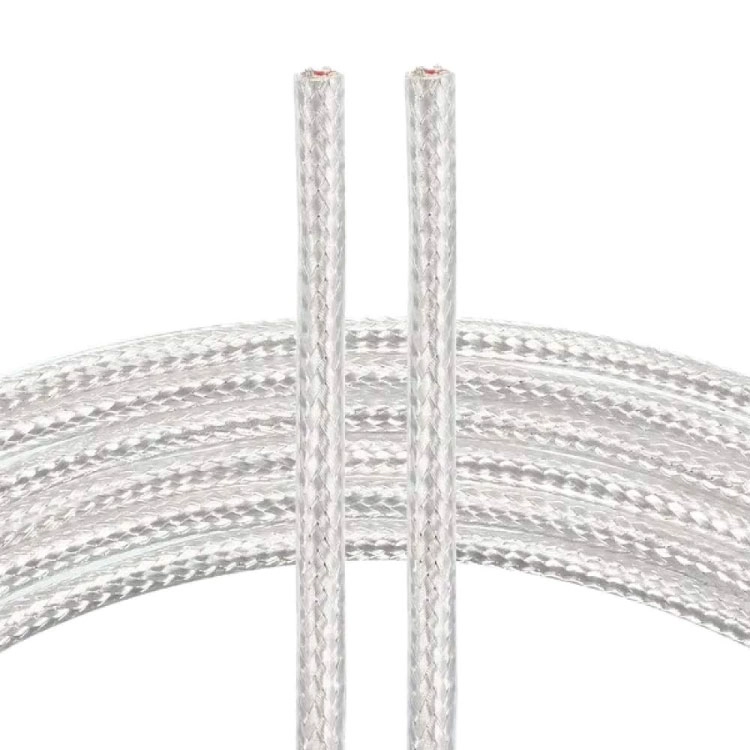
PT100 Cable 4x0.22 with a Metal Braided Shield and PTFE Insulation is an RTD sensor cable suitable for PT100, PT1000, CU50, and other resistance-type temperature sensors with compatible connection configurations. It transmits the measurement signal from the sensor to a temperature controller, indicator, data logger, PLC system, or control panel.
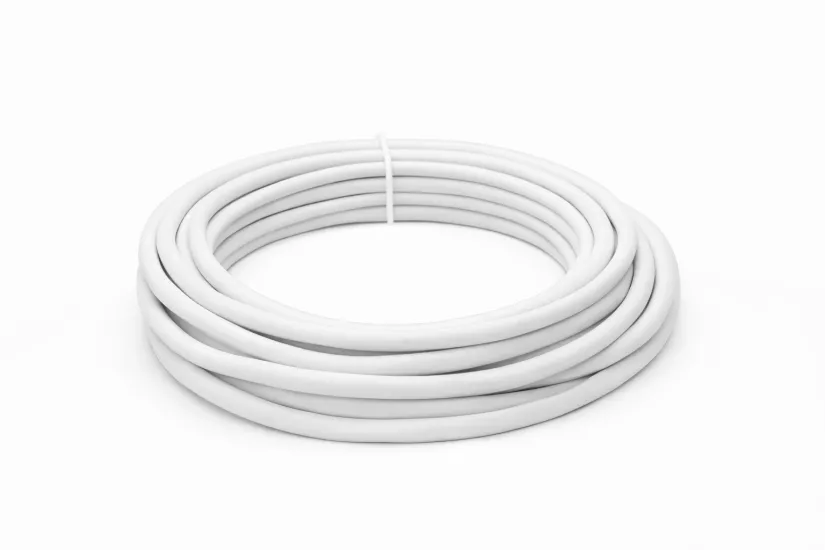
The four-core cable combines PTFE / Teflon core insulation and a transparent PTFE outer sheath with a metal braided shield. PTFE insulation supports the cable's use in industrial applications requiring temperature, chemical contact and low-friction surfaces. The metal braided shield helps protect the measurement line against sources of electrical noise.
This product is not an energy supply cable, but a sensor cable used to carry low-level measurement signals of resistance-type temperature sensors. When choosing the correct cable, the 2, 3 or 4-wire connection structure of the sensor and the input type supported by the measuring instrument should be evaluated together.
The cable's core insulation and outer sheath are PTFE / Teflon structure. PTFE is a technical insulation material used in industrial sensor cables due to its temperature resistance, resistance to chemical effects and low-friction surface properties.
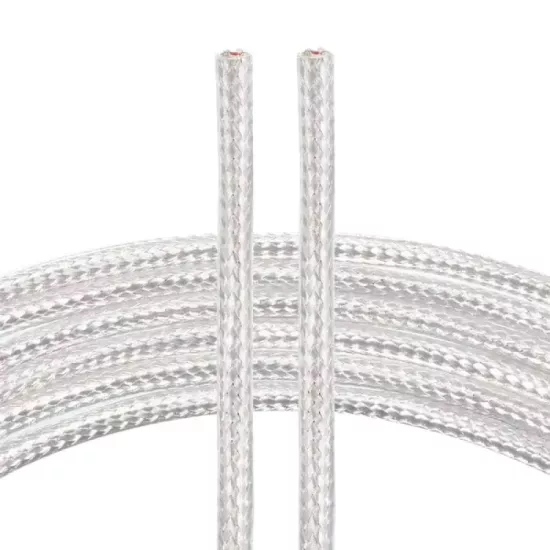
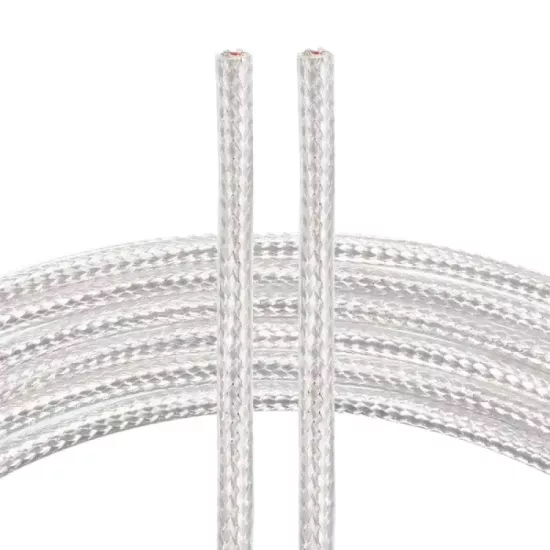
The transparent outer sheath allows visibility of the metal braided shield underneath the cable. The metal braided shield structure creates a physical and electrical protection layer around the cable.
The metal braided shield helps protect the sensor signal line in environments where electromagnetic noise sources such as motors, contactors, inverters, resistors, power cables and control panels exist. For the shield to work effectively, the connection and grounding scheme must be made in accordance with the electrical project of the application.
The four-core cable structure can be used especially for the connection of 4-wire PT100 measurement circuits. The use of separate current and voltage lines in the appropriate connection layout helps the measuring instrument to manage the conductor resistance effect caused by the connection cable in a more controlled manner.
The cable allows the sensor line to be extended in applications where the existing connection distance between the sensor and the measuring instrument is not sufficient. When selecting the number of cores and cross-section, the sensor connection type, cabling distance, device terminal and mounting area should be evaluated together.
The metal braided shield structure helps protect the measurement line on routes close to sources of electromagnetic interference. For this reason, it can be preferred in internal panel cabling, machine connections, around inverters and long sensor lines.
PTFE / Teflon-insulated structure provides advantages in industrial applications where temperature, chemical contact and low friction surfaces are required. The transparent outer sheath allows the metal braid structure to be controlled from the outside.
PTFE / Teflon insulation is the preferred structure for applications requiring temperature and chemical resistance in industrial sensor cables. Its low-friction surface can make it easier to pass the cable through appropriate channels and transition points.
The metal braided shield creates an additional layer of protection around the cable. This structure helps protect the signal line in applications where electromagnetic noise is intense, while also providing physical support to the cable structure under the outer sheath.
When determining the actual usage conditions of the cable, the insulation material must not be the only consideration. Ambient temperature, chemical contact, humidity, mechanical movement, minimum bending conditions, cabling route and connection points should be evaluated together.
PT100 sensors can use 2-wire, 3-wire and 4-wire connection methods. This cable is suitable for 4-wire connections with its four-core structure. The core layout to be used in connections with fewer cores should be determined according to the sensor and device connection diagram.
When making core connections, sensor tips and measuring instrument terminals must be matched correctly. Incorrect core matching, broken connection or short circuit may cause incorrect reading of the measured value or the device to display a sensor error.
The grounding connection of the metal braided shield must be made according to the electrical project of the application. Inappropriate or multiple-point shield connections may create ground loop and unwanted interference problems in some systems.
The sensor cable should be routed as far as possible from power cables, motor supply lines and inverter outputs. The cable must be protected from sharp edges, crush points and direct flame contact.
This product group can be ordered in cable lengths of 1 meter, 2 meters, 3 meters, 4 meters, and 5 meters. Cable length is selected using the Cable Length (K) field. The table below lists the product codes and variant barcodes for the available lengths.
| Product Code | Cable Type | Core / Cross-Section | Shield / Shield | Insulation | Cable Length | Variant Barcode |
|---|---|---|---|---|---|---|
| P-SSBS-4-0,22-Ç-1K | PT100 / RTD Sensor Cable | 4x0.22 mm² | Metal-braid shielded | PTFE / Teflon | 1 Meter | 759618174886 |
| P-SSBS-4-0,22-Ç-2K | PT100 / RTD Sensor Cable | 4x0.22 mm² | Metal-braid shielded | PTFE / Teflon | 2 Meters | 791042498497 |
| P-SSBS-4-0,22-Ç-3K | PT100 / RTD Sensor Cable | 4x0.22 mm² | Metal-braid shielded | PTFE / Teflon | 3 Meters | 791042498503 |
| P-SSBS-4-0,22-Ç-4K | PT100 / RTD Sensor Cable | 4x0.22 mm² | Metal-braid shielded | PTFE / Teflon | 4 Meters | 791042498589 |
| P-SSBS-4-0,22-Ç-5K | PT100 / RTD Sensor Cable | 4x0.22 mm² | Metal-braid shielded | PTFE / Teflon | 5 Meters | 791042498596 |
When choosing a cable, sensor type, 2-3-4 wire connection structure, number of cores, core cross-section, cable length, insulation material, electromagnetic interference level and input structure of the measuring instrument should be evaluated together.
This product, with its 4-core, PTFE insulation and metal braided shield structure, is especially suitable for multi-core RTD connections and industrial environments where there is a risk of electrical noise.
If the sensor or device uses a 2- or 3-wire connection, how the idle wires will be terminated should be determined according to the connection diagram of the device manufacturer. Cores should not be joined randomly.
This product can be used with resistance-type temperature sensors that have a suitable connection configuration, particularly PT100, PT1000, and CU50 sensors. Exact compatibility must be checked against the wiring diagrams of the sensor and measuring instrument.
No. This product is not thermocouple cable, it is PT100 / RTD sensor cable used for resistance-type temperature sensors.
The expression 4x0.22 mm² indicates that the cable consists of four cores and each core is in cross-section class 0.22 mm².
The metal braided shield helps reduce the sensor signal line from being affected by electromagnetic noise. It can be preferred especially in environments where motors, inverters, contactors and power cables are present.
Shield connection must be made according to the electrical project of the application and the device manufacturer's instructions. Improper connections or connections made from more than one point may create a ground loop.
PTFE / Teflon insulation is preferred in industrial sensor cables due to its temperature and chemical resistance and low-friction surface properties.
It can be used physically. However, the connection pattern of the cores to be used must be determined according to the diagram of the sensor and measuring instrument. Unused cores should not be combined randomly.
No. This product is designed for temperature sensor measurement line. It should not be used to power motors, heating elements, or similar electrical loads.
Select the appropriate 1-, 2-, 3-, 4-, or 5-meter option using the Cable Length field.
The manufacturer's technical data sheet should be used as the basis for the exact operating temperature, conductor construction, electrical values, minimum bending radius and other material properties of the cable. When choosing a product, the temperature, chemical contact, mechanical protection and electrical interference conditions of the application should be evaluated together.




 EN
EN Türkçe