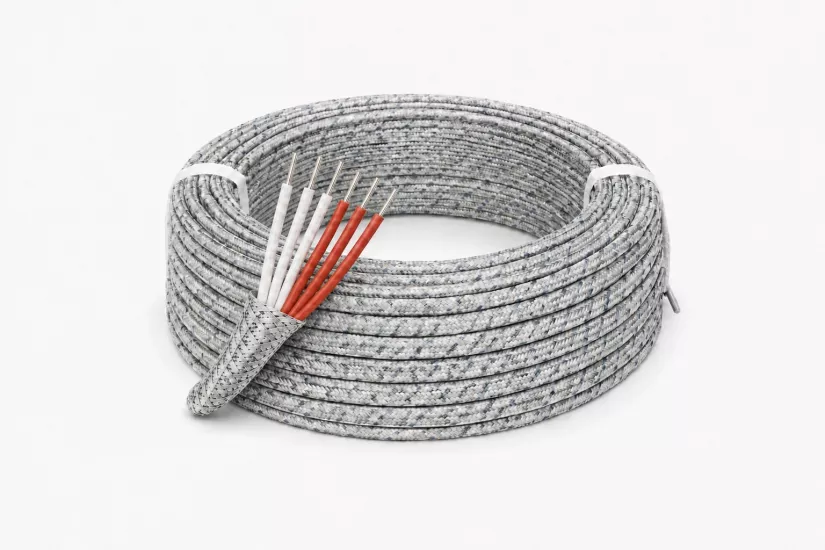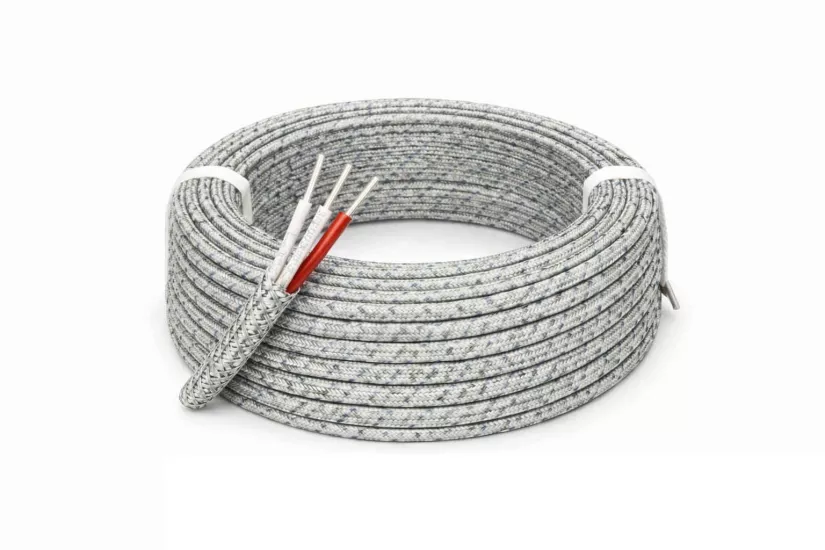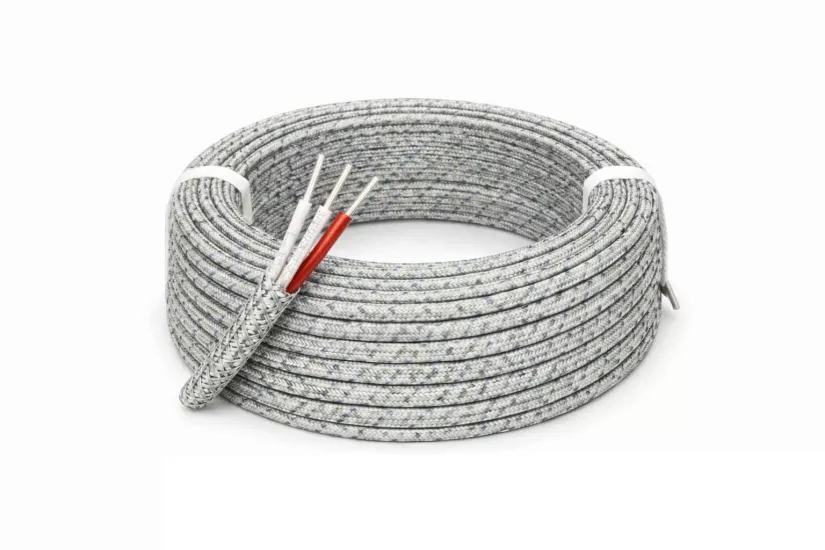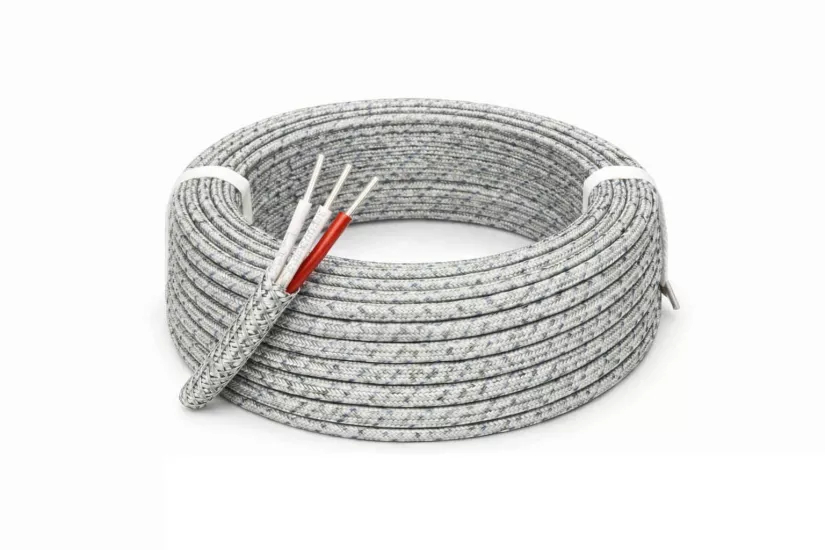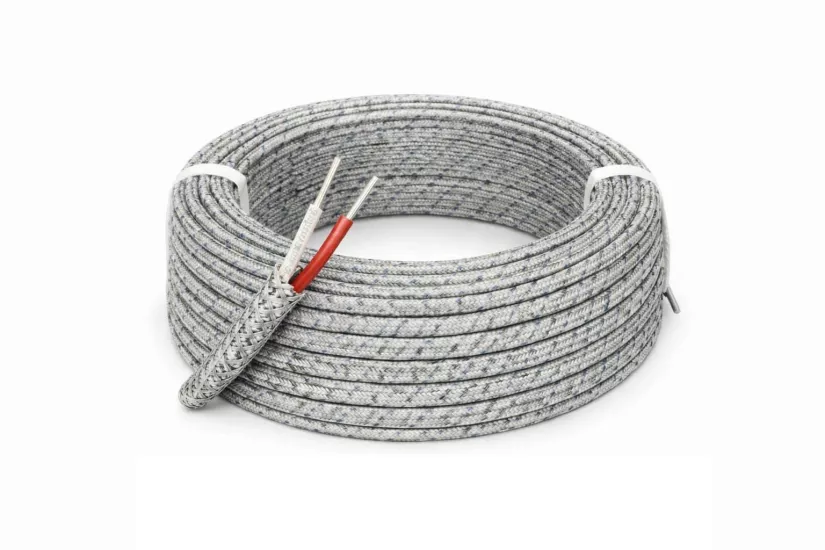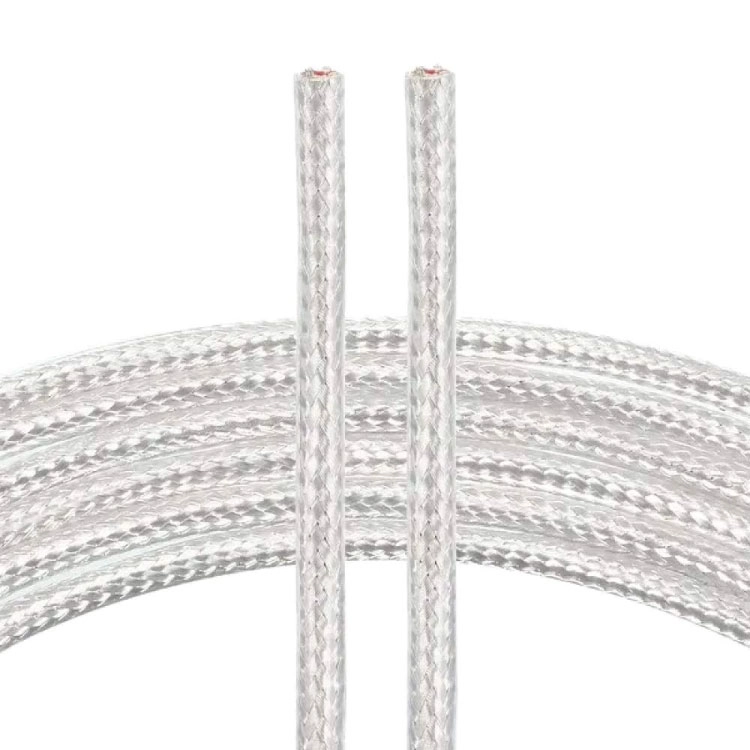
PT100 Cable 6x0.22 mm² is a six-core sensor cable designed for signal connections between RTD/PT100 temperature sensors and measuring instruments. It can be used for connections to temperature controllers, indicators, data loggers, PLC RTD inputs, and control panels.
One of the primary purposes of the cable's six-core construction is to connect dual-element PT100 sensors through a single cable. The dual element PT100 sensor may contain two independent temperature measurement elements. When each PT100 element is used with a three-wire connection, three cores are required for the first sensor and three cores for the second sensor. Thus, a total of six cores are used.
The six-core construction can carry the signals from two separate PT100 measuring elements in a dual-sensor application within the same cable body while keeping them on independent core groups. This construction may be considered for systems requiring primary and backup measurement, separate control and safety channels, or connections to two separate measuring instruments.
When using double sensors, each three-wire group must be connected to a separate PT100 element. The two measurement circuits should not be mixed together and the core groups should be defined according to the connection diagram of the sensor. For this usage to be applicable, the sensor must be truly dual element and the measuring instrument must support two independent RTD inputs.
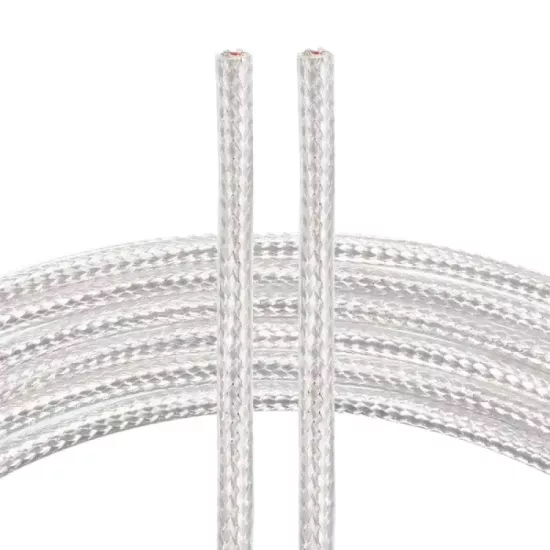
PTFE insulation is preferred in industrial connections where temperature effects are present and standard plastic insulation is not sufficient. The metal braid around the cable provides auxiliary mechanical protection to the cable body and can contribute to the protection of measurement signals from electrical effects under appropriate connection conditions.
This product is not a thermocouple cable or a power supply cable. It should be used to transmit the resistance-change measurement signals of PT100 and compatible RTD sensors. The sensor connection type, core arrangement, and the measuring instrument's RTD input configuration should be verified before installation.
Three cores are required for the connection of a standard three-wire measuring element PT100. When the double-element PT100 sensor has two separate measuring elements, a separate three-wire connection is made for each element:
Therefore 6x0.22 mm² cable, especially in dual sensor or dual element PT100 applications is preferred. Each PT100 element has its own three-wire measurement circuit and the two channels can be measured independently of each other.
Dual-element PT100 sensors can be used in applications where the temperature at the same point must be monitored with two independent measurement channels. One channel is used for process control, while the second channel can be used for recording, control, comparison, backup or safety purposes.
The six-core cable can also be used to transport two separate three-wire PT100 sensors on the same route, if the connection project is suitable. However, core groups must be defined, labeled and terminated separately according to sensor and device connection diagrams.
The presence of six cores does not necessarily mean that all cores will be used in every application. In standard single-element two-, three- or four-wire PT100 connections, unused cores must be properly insulated without leaving any open ends.
A dual-element PT100 sensor contains two separate RTD measuring elements in the same sensor body. Although both elements operate at the same measurement point, they are electrically independent of each other.
When both PT100 elements are used with a three-wire connection, the six cores in the cable are divided into two separate groups. The first three-wire group is connected to the first PT100 element, and the second three-wire group is connected to the second PT100 element.
It is not appropriate for two sensor circuits to use common cores or to be randomly connected together. The two PT100 circuits must be kept independent of each other unless a different structure is clearly specified in the sensor manufacturer's wiring diagram.
A PLC, controller, data logger or temperature indicator with two independent RTD inputs should be used on the measurement side. A device with a single RTD input cannot simultaneously measure two separate PT100 elements independently.
In order to provide these advantages, the sensor must have a double-element structure, the cable cores must be grouped correctly, and the devices used must support two independent RTD measurement channels.
PTFE insulation used in cable cores helps maintain electrical insulation in sensor and measurement connections where temperature effects are present. Thanks to its slim and compact structure, it provides a tidy cable construction in multi-core sensor cables.
PTFE is a preferred insulation material in applications where temperature, humidity and various industrial substances are present. However, the suitability of a cable for a particular chemical environment should not be determined solely by looking at the name PTFE. Manufacturer compatibility data for the liquid, gas or chemical to be contacted should be checked.
The exact operating temperature of the cable should not be determined solely by the PTFE insulation. The temperature limits of the conductor structure, metal braid, terminal, connector, splice point and sensor connection should be evaluated together.
The metal braid around the cable creates an additional layer that protects the cores from external influences. It helps protect the cable body against friction and light mechanical effects on routes with machine body, control panel, cable duct and surface contact.
Metal braid; Its electrical continuity, coverage structure and connection method, when appropriate, can contribute to the protection of the measurement line from electromagnetic effects. The shielding performance to be achieved depends on the material of the braid, coverage rate, electrical continuity, cable route and the way the shield connection is implemented.
The shield or ground connection should not be applied the same way in every system. The connection instructions of the measuring instrument manufacturer, the control panel project and the grounding structure of the facility should be used as the basis.
PTFE insulation is preferred in sensor connections where temperature effects and electrical insulation are required. However, the exact temperature range and environmental resistance of the product must be determined according to the manufacturer's technical documentation.
Metal braid does not turn the cable into a completely enclosed or leak-proof outer sheath. In environments with moisture, liquid, oil, chemicals or dense dust, the cable route and connection points must be additionally protected.
The cable should not be subjected to excessive pulling force, crushing, sharp edges or repeated bending. Metal braid helps with mechanical protection, but does not provide unlimited protection against heavy impact, cuts or crushing.
Hot surfaces, moving parts, vibration, liquid contact and mechanical stress should be evaluated together during the assembly route. When necessary, cable duct, protective spiral, gland or suitable connection apparatus should be used.
In the double-element PT100 sensor connection, the six wires must be arranged in two separate three-wire groups. The first core group should be connected to the first PT100 element, and the second core group should be connected to the second PT100 element.
Core groups must be clearly labeled during installation and the same group arrangement must be maintained at both ends of the cable. Mixing the cores of the first and second sensor element may cause inaccurate or unstable measurements.
Each PT100 element must be connected to a separate three-wire RTD input of the measuring instrument. If the measuring instrument only has a single RTD input, two PT100 elements cannot be measured independently at the same time.
In the three-wire RTD connection, the length, nominal cross-section and conductor properties of the cores used in the same measuring branch must be compatible. If the measuring instrument supports three-wire RTD input, this can help offset the wire resistance effect.
It is not appropriate for two separate three-wire PT100 circuits to use a common core unless expressly stated in the sensor manufacturer's wiring diagram. Each sensor element must be considered an independent connection group.
While preparing the cable end, care should be taken to ensure that the metal braid wires do not come into contact with the measurement cores or device terminals. The braid should be pulled back properly and the connection area should be isolated in accordance with the application.
The PT100 cable should be routed as far as possible from motor supply lines, inverter outputs, contactor lines and high-current power cables.
When selecting the PT100 cable, the single or double element structure of the sensor, the connection type of each element, the number of RTD inputs on the measuring instrument, the number of cores, connection distance, nominal cross-section, insulation and shielding needs should be evaluated together.
Single-element PT100 sensors often use two-, three- or four-wire connections. In PT100 sensors, which have double elements and three wires in each element, a total of six cores are used because two separate three-wire connections are required.
Therefore, the 6x0.22 mm² product offers a cable structure particularly suitable for applications where dual-element PT100 sensors are connected to two independent measurement channels. The exact connection method must be determined by comparing the technical documentation of the sensor and measuring instrument.
The six cores are specifically used for the connection of double element PT100 sensors. When each PT100 measuring element is connected with three wires, a total of six wires are required for two independent sensor elements.
This statement indicates that the cable consists of six separate cores and each core has a nominal conductor cross-section of 0.22 mm².
A dual element PT100 sensor is a sensor with two separate and electrically independent PT100 measuring elements within the same sensor body. Two elements can be connected to different measurement channels.
The first three wires are connected to the first PT100 element, and the other three wires are connected to the second PT100 element. Each sensor element must be connected to a separate three-wire RTD input on the measuring instrument.
If the measuring instrument has two independent three-wire RTD inputs, two PT100 elements can be connected to the same device via separate channels. Two elements cannot be measured independently at the same time on a device with a single RTD input.
Dual sensor structure can be used to separate main and backup measurement, control and safety channels, to compare two measurement values or to transmit the same temperature information to two different systems.
The sensor connection diagram can be used if appropriate. However, in a single element PT100 connection, all six cores may not be needed. Unused cores should be properly isolated.
If the application project, sensors and measuring devices are suitable, the six cores can be used for two separate three-wire PT100 circuits. The two groups of cores should be clearly defined and not confused.
PTFE insulation helps maintain electrical insulation in sensor connections where temperature effects are present. The exact operating temperature and environmental suitability must be determined according to the manufacturer's technical data.
The metal braid provides auxiliary mechanical protection to the cable trunk. When its electrical continuity and connection are designed appropriately, it can also contribute to the protection of the measurement line from electromagnetic effects.
The way the shield connection is implemented depends on the measuring instrument, the electrical project and the grounding structure of the facility. The device manufacturer's instructions should be based on a universal connection method.
No. This product should be used for measurement connections of PT100 and compatible RTD sensors. It should not be used to power motors, heating elements or other electrical loads.
The manufacturer's technical data sheet should be used as the basis for the conductor material of the cable, core resistance, exact operating temperature, core colors, outer diameter, metal braid material, shield coverage ratio, minimum bending radius and environmental resistance limits.
During product selection and installation, the single or double element structure of the PT100 sensor, the connection type of each element, the number of inputs of the measuring instrument RTD, cable length, terminal structure, ambient temperature, mechanical loads and wiring route should be evaluated together.




 EN
EN Türkçe