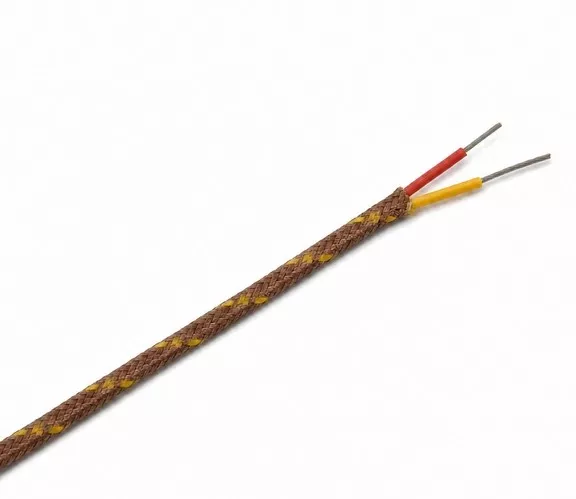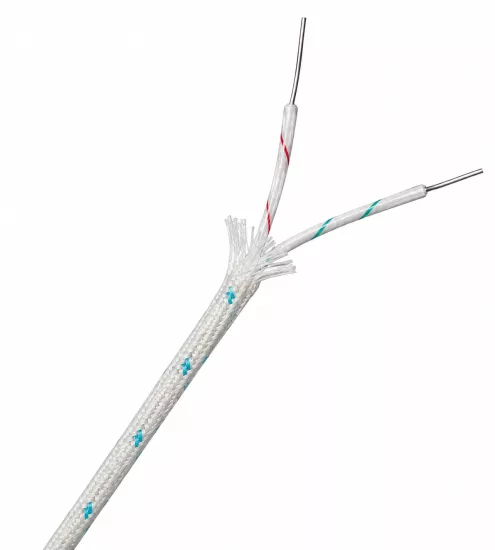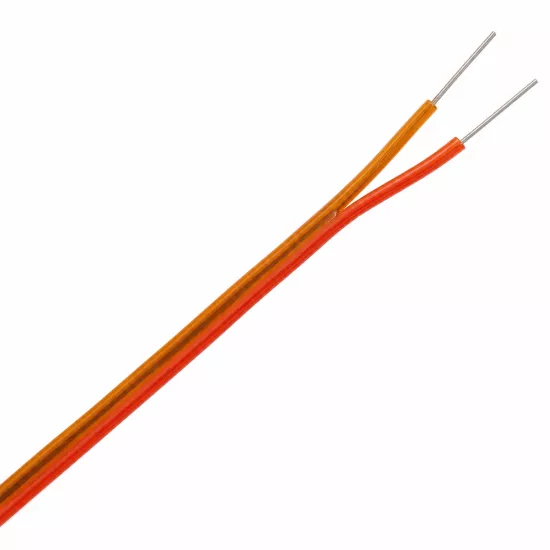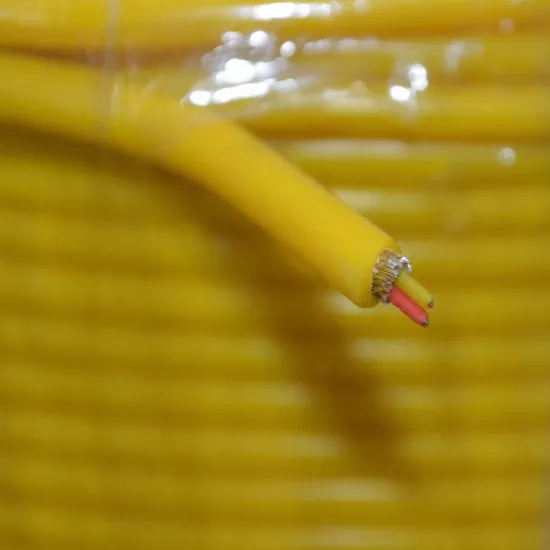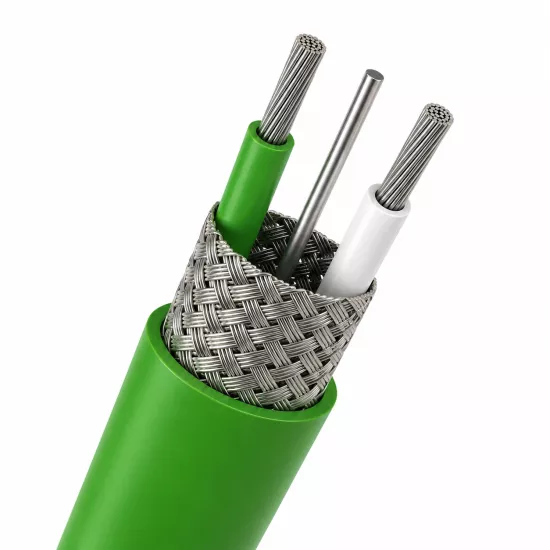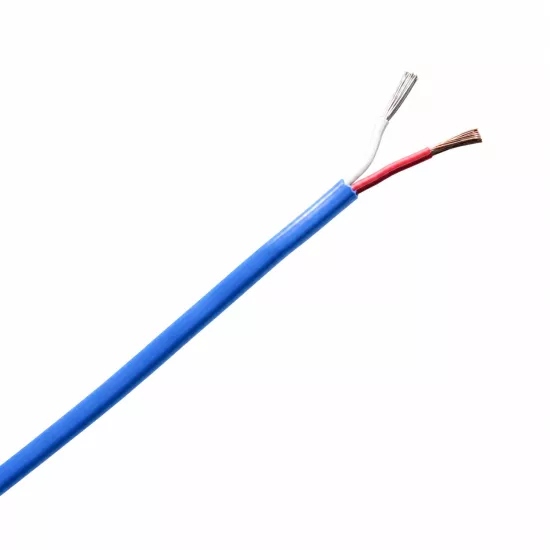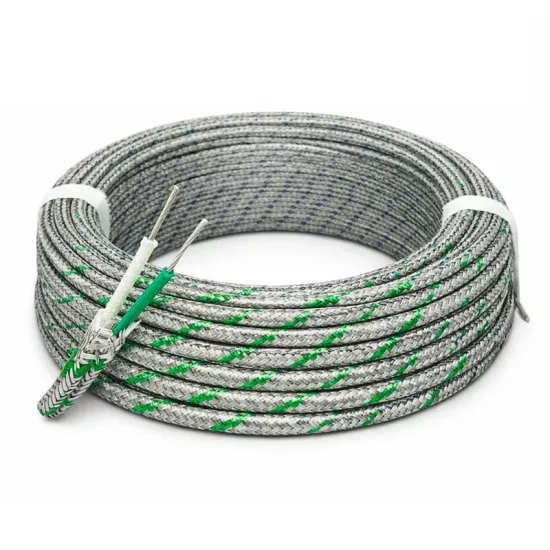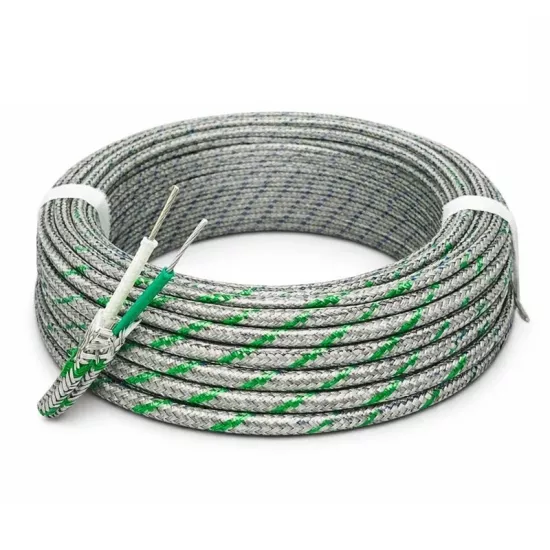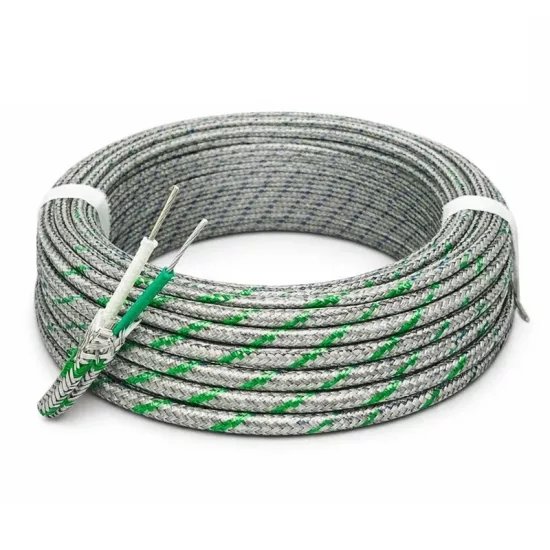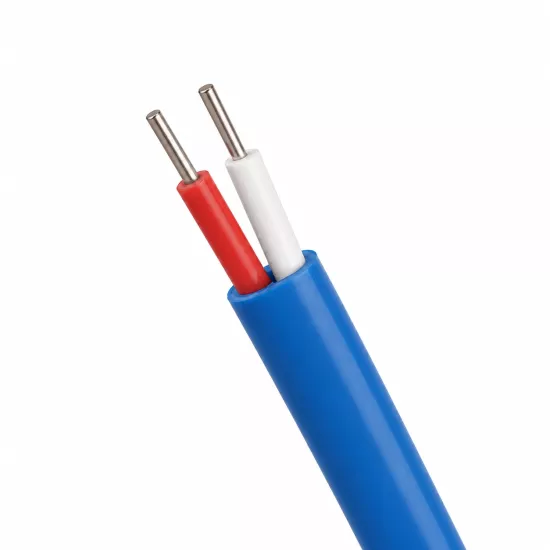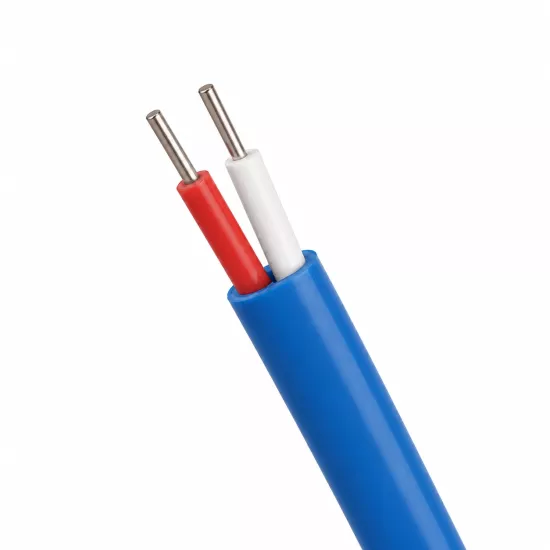
Hot Zone K-Type (NiCr-Ni) Extension Cable 2x1.50 mm² is a high-temperature-resistant thermocouple extension cable used to transmit the thermoelectric signal received from the K-Type thermocouple sensor to the temperature controller, indicator, data logger, PLC thermocouple input or control panel.
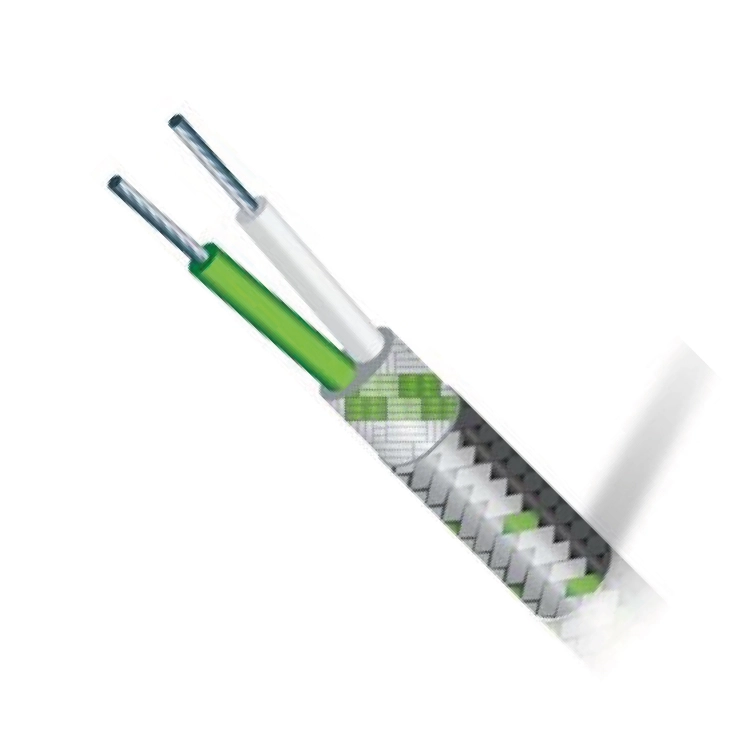
The cable combines the two-core 2x1.50 mm² conductor structure with fiberglass braid and mica tape-based multilayer insulation. The steel braid on the outer section helps protect the cable body against friction, abrasion and surface mechanical effects.
Based on the 400°C temperature resistance stated in the product information, the cable can be used around industrial furnaces, on heat-treatment lines, in heating-element zones, and along cable routes near hot surfaces. The actual operating temperature must be determined by jointly considering the installation method, air circulation, contact duration, connection components, and the surface temperature to which the cable is exposed.
This product is not a standard power supply cable. It should be used to continue the measurement circuit with the appropriate thermoelectric structure. For accurate measurement, the sensor, extension cable, connector and measuring instrument input must be compatible with the K-Type thermocouple system.
The combination of fiberglass braid and mica tape creates a multilayer structure that helps maintain the electrical insulation and physical integrity of the cable in high temperature regions where standard plastic-based insulations are not suitable.
Mica tape is an inorganic-based material that supports electrical insulation under the influence of high temperatures. Fiberglass braid helps hold the insulation layers together and mechanically support the cable surface.
Steel braid surrounding the cable provides additional mechanical protection in close passages to metal surfaces, machine connections and fixed routes where there is a possibility of friction. Steel braid does not completely seal the cable and does not provide unlimited protection against heavy crushing, cutting or excessive pulling force.
If the shield is planned to be used as an electrical shield, the electrical continuity of the braid, connection method and grounding scheme should also be evaluated. The main function of steel braid is mechanical protection.
The product contains green and white core colors used in K-Type thermocouple circuits. According to IEC color scheme green core indicates the positive (+)and the white core indicates the negative (-) Indicates polarity.
Different color coding systems such as IEC, ANSI and JIS can be used in thermocouple cables. Therefore, the same K-Type thermocouple cable may have different core or outer sheath colors depending on the applied standard.
The connection should not be made just by looking at the cable color. The polarity markings of the sensor, cable cores, thermocouple connector and terminal diagram of the measuring instrument must be checked together.
Fiberglass and mica tape based insulation is preferred in applications where the cable must be passed through areas subject to high temperature effects. Inorganic-based insulation layers offer a more suitable structure for operating conditions above the temperature limits of standard PVC or similar plastic insulation.
The multilayer insulation structure helps separate the two conductors and carry the thermocouple measurement signal along the connection line. To prevent damage to the insulation layers, the cable should not be crushed, sharply bent or clamped with unsuitable connection components during installation.
2x1.50 mm² section structure can be preferred in industrial applications where higher mechanical strength and connection strength are required. When selecting the cross-section, terminal size, connector structure, cable route and installation area should be evaluated together.
The temperature resistance of the cable specified as 400°C is valid for suitable installation and operating conditions. This value does not mean that the cable can be constantly and directly contacted to a surface at a temperature of 400°C under all conditions.
When determining the actual operating limit, whether the cable will operate in ambient air or in contact with a hot surface, temperature exposure time, air circulation, mechanical movement and temperature resistance of the connection points should be evaluated together.
The steel braid outer construction is not a leak-proof outer sheath. In applications where oil, liquid, intense humidity, chemicals or abrasive environments are present, the cable's compliance with environmental conditions must also be verified.
The product should not be considered a fire cable designed for direct flame contact. In applications where open flames, molten metal spatter, or unusual radiant heat are present, additional protective sheathing and mounting precautions may be required.
In the K-Type thermocouple measurement circuit, core polarity must be preserved throughout the connection. The green wire should be connected to the positive (+) terminal and the white wire should be connected to the negative (-) terminal.
Reverse polarity may cause the measurement value to change in the wrong direction or the device to display incorrect temperature as the temperature rises. Terminal markings on the sensor and device should be checked before installation.
Cable, terminal and thermocouple connector compatible with K-Type must be used in the K-Type thermocouple circuit. Standard copper cable or connection materials of different thermocouple types may create improper metal connections in the measurement line, causing measurement deviation.
While preparing the cable end, care should be taken to ensure that the steel braid wires do not come into contact with the internal conductors or device terminals. The steel braid must be rolled back properly and the connection area must be protected with high temperature insulation suitable for the application.
The cable must not be bent below the minimum bending radius and must not be used in continuously moving cable transport systems without verifying its technical suitability. Fiberglass and mica tape construction should be considered primarily for fixed or limited movement high temperature connections.
When selecting the product, thermocouple type, conductor cross-section, maximum ambient temperature, distance to the hot surface, cable route, mechanical protection need and the device to be connected should be evaluated together.
This product is suitable for K-Type NiCr-Ni thermocouple measurement circuits. For J, T, N, E, R, S or different thermocouple types, an extension or compensating cable compatible with the relevant sensor type must be used.
Even if the 400°C value is required, the compliance of the device terminal, connector, terminal block, cable gland and additional connection elements with the same temperature conditions should be checked separately. The temperature resistance of the system is evaluated according to the component with the lowest temperature limit.
This product is suitable for K-Type NiCr-Ni thermocouple measurement and extension circuits.
It indicates that the fiberglass and mica tape insulation structure used in the product can be used up to 400°C level under the specified appropriate operating conditions. The real limit; May vary depending on mounting method, exposure time, surface contact and connection components.
Mica tape supports electrical insulation under high temperature. Fiberglass braid helps hold the insulation layers together and physically protect the cable.
The steel braid creates additional mechanical protection around the cable trunk. It helps protect the cable against friction, wear and surface mechanical effects.
The main function of steel braid is mechanical protection. In order to be used as an electrical shield, the electrical continuity of the braid, the connection method and the grounding scheme must be technically verified.
Ambient temperature alone is not sufficient for direct surface contact. Surface temperature, contact time, heat transfer and installation method should be evaluated together.
No. This product is used to transmit the thermocouple measurement signal. It must not be used to power heating elements, motors, or other electrical loads.
The thermocouple connector, terminal or terminal type to be used for the termination need and the operating temperature must be specified. Connection components must also be suitable for the application temperature.
The manufacturer's technical data sheet should be used as the basis for the exact conductor construction, tolerance class, outer dimension, minimum bending radius, steel braid properties, continuous operating limit and environmental resistance values of the cable.
The 400°C temperature rating must not be the only consideration when selecting the product. The thermocouple type, polarity, cable route, mechanical loads, connection components, and actual field conditions must be evaluated together.




 EN
EN Türkçe